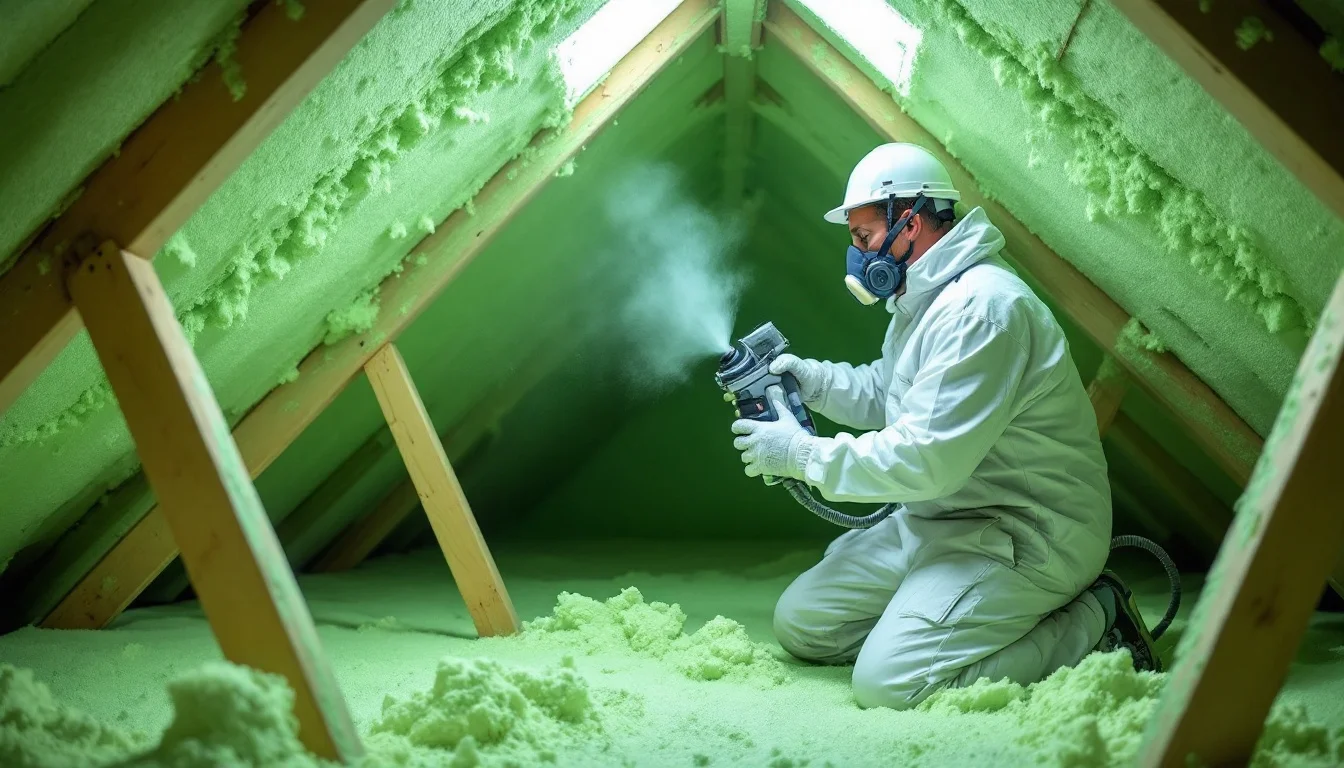
★ Peoria’s Spray Foam Specialists · 19+ Years Local
Spray Foam Insulation in Peoria, IL. Seal Every Gap. Cut Every Bill.
From attic bypasses to crawl space encapsulation — we deliver the air sealing and R-value performance that Central Illinois homes actually need.
- Licensed & insured in Illinois
- Free written estimates — no obligation
- Spray foam, open-cell and closed-cell applications
★★★★★
5-Star Rated — Peoria area homeowners
Get Your Free Insulation Quote
Most responses within 2 business hours.
Free · No obligation · No pressure
2,100+
Homes Insulated
19+
Years in Peoria
40%
Avg Energy Savings
5
Star Rated
Licensed & Insured in Illinois
Free Written Estimates
Peoria IL Specialists
Open-Cell & Closed-Cell Applications
Our Promise
We Seal Every Gap, Deliver the R-Value We Promised, and Treat Your Home Like Our Own
We show up with the right equipment, apply to spec, and don’t leave until coverage is verified. Every Peoria home we insulate gets the same attention — whether it’s a 900 sq ft bungalow in Bartonville or a commercial warehouse in East Peoria.
See Our ServicesHow It Works
From First Call to Finished Insulation
Three simple steps. No confusing timelines, no surprise charges. Here’s what to expect from your first call to the last square foot.
01
Day 1
Free On-Site Assessment
We come to your property, inspect the attic, crawl space, or walls, check for air bypasses and current coverage levels, and leave you with a written quote. No vague ranges — a real number you can plan around.
02
Days 2–5
Prep & Schedule
We handle any required prep work, confirm material quantities, and schedule your install window. You don’t have to manage any of it — we coordinate everything and confirm the day before.
03
Install Day
Install & Coverage Verify
Our crew sprays to the specified depth and R-value, verifies coverage throughout the space, cleans up completely, and walks you through what was done. The job isn’t closed until you’re satisfied.
Call 309-491-4457
Mon–Sat, 7am–6pm · Free estimates always
Local Expertise
Why Peoria Homes Need Spray Foam: Freeze-Thaw Cycles, Aging Stock, and Energy Bills That Don’t Quit
Central Illinois conditions create insulation challenges that fiberglass batts simply cannot solve on their own. Here’s what local homes actually face.
Freeze-Thaw Concrete Movement
Peoria averages over 100 freeze-thaw cycles per year. Concrete foundations and rim joists crack and shift, creating new air bypasses every winter. Spray foam moves with the structure and maintains the seal.
1950s-Era Drafty Construction
Most Peoria homes were built between 1940 and 1975 with little attention to air sealing. Balloon-frame construction, unblocked stud cavities, and open attic bypasses drain heat and drive up utility bills year-round.
Attic Bypass Heat Loss
In most Peoria homes, 30–40% of heating loss happens through attic bypasses — the gaps around light fixtures, plumbing chases, and interior wall top plates. Spray foam seals these at the source rather than burying them under batts.
Utility Costs That Keep Climbing
Ameren Illinois rates have risen significantly over the past decade. A well-sealed, properly insulated Peoria home uses meaningfully less energy for heating and cooling — the savings compound every month, every year.
Insulation Comparison
Spray Foam vs. Fiberglass Batts vs. Blown-In Cellulose
Not all insulation performs the same in Peoria’s climate. Here’s an honest side-by-side for the three most common options.
| Feature | ★ Spray Foam | Fiberglass Batts | Blown-In Cellulose |
|---|---|---|---|
| R-Value per Inch | R-3.7 (open-cell) – R-6.5 (closed-cell) | R-3.1 to R-3.4 | R-3.2 to R-3.8 |
| Air Seal Included | Yes — primary benefit | No — air moves around batts | Partial — dense pack only |
| Moisture Barrier | Yes (closed-cell) | No | No |
| Lifespan | Indefinite — does not settle | 15–20 years, sags over time | 20–30 years, may settle |
| Best Application | Attics, crawl spaces, rim joists, commercial | New construction walls, low-budget retrofits | Flat attic floors, attic top-offs |
| Cost per Sq Ft | Higher upfront — lower long-term cost | Lowest upfront | Mid-range |
Prices vary by application depth, area size, and access. Call 309-491-4457 for a free written quote.
Our Work
Recent Insulation Projects in the Peoria Area
Every project is different. Here’s a sample of what we’ve completed across Peoria and the surrounding communities.
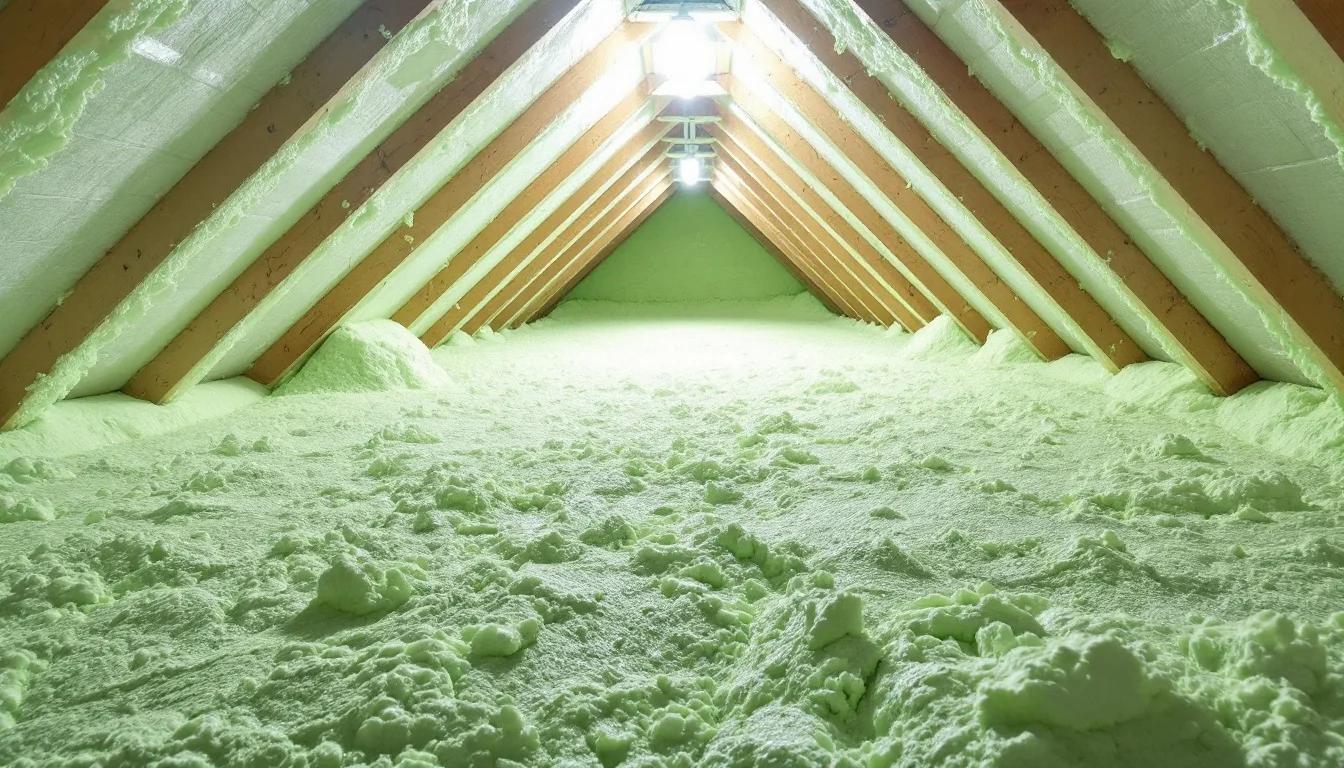 Attic Spray Foam
Completed
Attic Spray Foam
Completed
Attic Insulation — Complete Coverage
East Peoria, IL · Tazewell County
1,400Sq Ft
Open-CellType
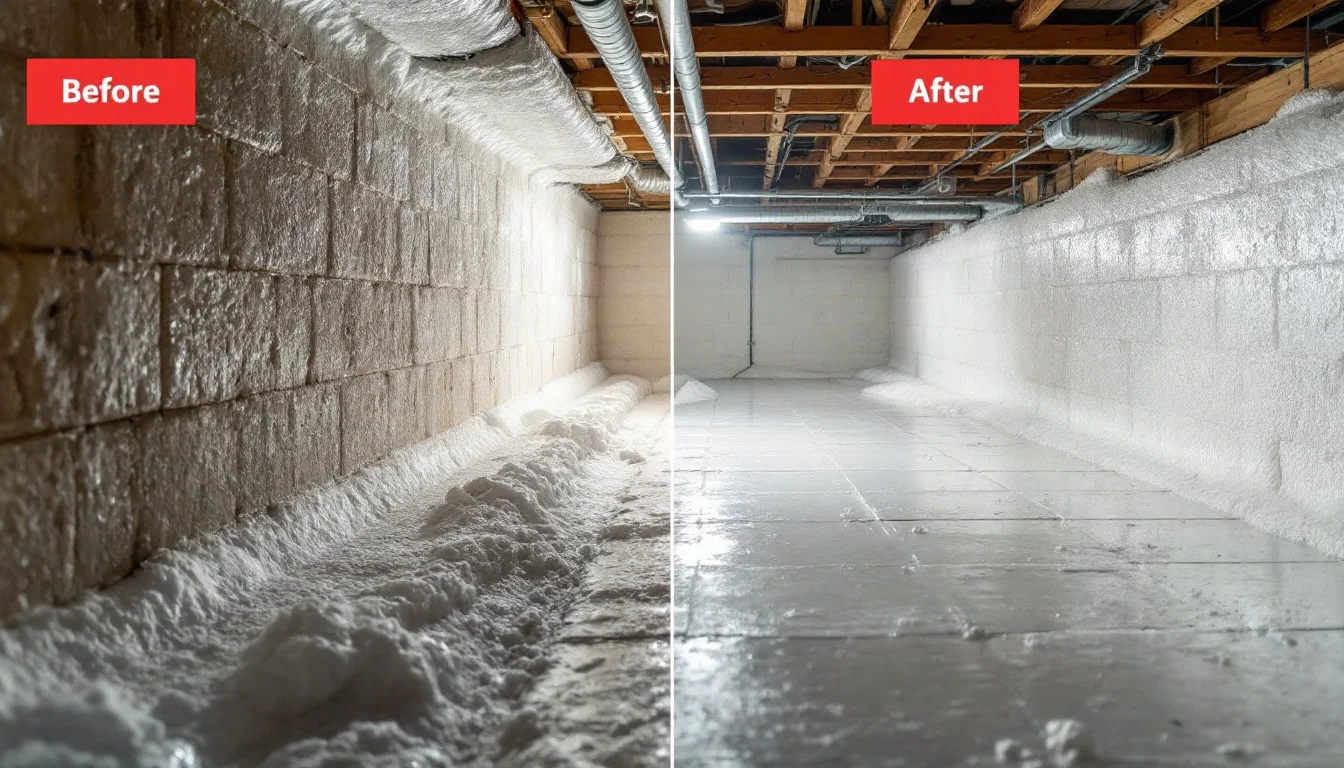 Crawl Space
Completed
Crawl Space
Completed
Crawl Space Encapsulation
Morton, IL · Tazewell County
900Sq Ft
Closed-CellType
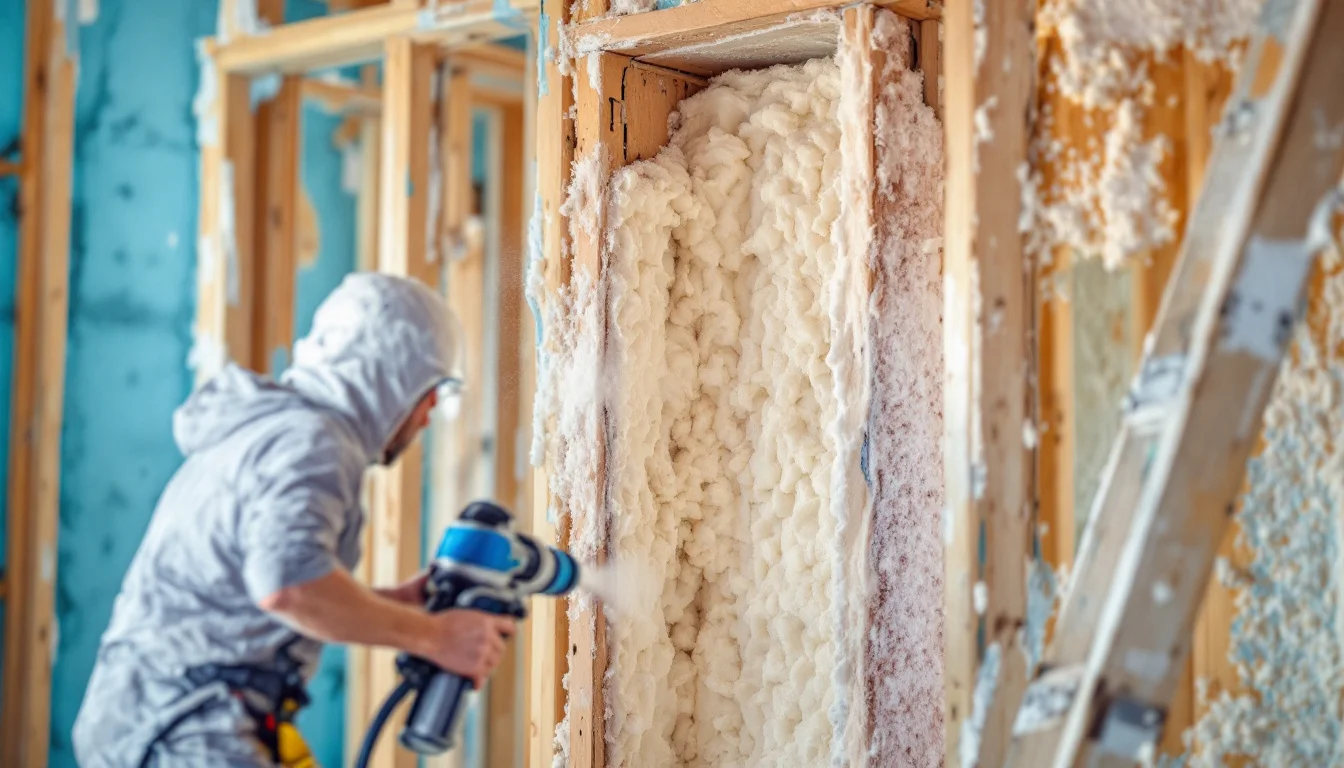 Wall Insulation
Completed
Wall Insulation
Completed
Wall Cavity Insulation
Dunlap, IL · Peoria County
2,200Sq Ft
Open-CellType
 Commercial
Completed
Commercial
Completed
Commercial Warehouse Roof
Pekin, IL · Tazewell County
8,500Sq Ft
Closed-CellType
Customer Reviews
What Peoria Homeowners Are Saying
We let our work and our customers speak for themselves.
★★★★★
My utility bills dropped noticeably the first winter after they insulated my attic in north Peoria. The crew was thorough — they found two open chases above the garage that the previous contractor had missed entirely. Honest and professional throughout.
★★★★★
We had a very drafty 1960s ranch in East Peoria. After spray foam in the rim joists and crawl space, the floors are noticeably warmer and there’s no more cold air coming up through the vents in winter. Worth every penny.
★★★★★
I got three quotes for attic insulation. Peoria Spray Foam Pros came in at a fair price and were the only crew who explained exactly what they were doing and why. The job was done in one day, clean, and the follow-up was a nice touch.
★★★★★
New construction in Dunlap and we hired them for the full insulation package — exterior walls, attic, and rim joists. Showed up exactly when they said they would, communicated well with the general contractor, and the work passed the blower door test on the first try.
★★★★★
Older home in Pekin, very drafty basement rim joist area. After they sealed it with closed-cell spray foam the difference was immediate. No more cold coming up through the floors. Crew was clean and professional. Would use them again without hesitation.
★★★★★
5-Star Rated — Peoria area homeowner feedback

19+
Years in Peoria
About Us
Locally Owned in Peoria. Energy Efficiency Is All We Do.
We’ve been insulating homes and commercial buildings in Peoria and the surrounding communities for more than 19 years. That means we understand the freeze-thaw patterns that open up new air gaps every spring, the 1960s and 70s construction techniques that leave homes chronically under-insulated, and the specific areas of a Peoria home that lose the most heat.
“Our goal isn’t to put foam in every gap — it’s to solve the energy problem. Sometimes that’s spray foam; sometimes it’s a combination approach. We tell you what actually makes sense.”
- Licensed contractor, Illinois Department of Labor
- General liability and workers’ compensation insured
- Open-cell and closed-cell applications
- Residential and commercial — attics to warehouses
Our Approach
How We Work By Service Type
Every project gets the same level of care. Here’s what our process looks like for each of our core insulation services.
Attic Insulation
- Air bypass identification and sealing
- Existing insulation depth measurement
- Rafter vs. attic floor assessment
- Open-cell or closed-cell selection
- Coverage verification before leaving
Crawl Space
- Moisture assessment and source identification
- Rim joist air sealing
- Foundation wall vs. floor system assessment
- Closed-cell application for moisture barrier
- Venting vs. conditioned space review
Wall Insulation
- Cavity depth and stud spacing confirmation
- Injection vs. open-wall selection
- Electrical and plumbing coordination
- Air sealing around penetrations
- Patching and surface prep guidance
Commercial
- Load calculations and material specification
- Metal building vs. wood frame approach
- Scheduling around business operations
- High-volume closed-cell application
- Documentation for energy compliance
Where We Work
Serving Peoria & Central Illinois
We insulate homes and commercial buildings across Peoria County, Tazewell County, Woodford County, and surrounding communities. If you’re within 35 miles of Peoria, we cover you.
Peoria
East Peoria
Pekin
Morton
Dunlap
Washington
Bartonville
Chillicothe
Germantown Hills
Trivoli
Mapleton
Peoria Heights
West Peoria
Creve Coeur
FAQ
Common Questions About Spray Foam Insulation in Peoria
Open-cell spray foam is softer, expands more, and provides a good air barrier at a lower cost per board-foot — it’s well-suited for attics and interior walls where moisture is not a primary concern. Closed-cell is denser, provides a vapor barrier, and has a higher R-value per inch (around R-6.5 vs. R-3.7 for open-cell). We use closed-cell in crawl spaces, rim joists, and exterior applications where moisture resistance matters.
Spray foam insulation costs depend on the area size, application type, and access difficulty. A typical Peoria attic (1,000–1,500 sq ft) runs between $2,000 and $5,500 for spray foam. Crawl space encapsulation generally runs $1,800–$4,500. Commercial projects are priced by the board-foot on application. We give you a fixed written quote after the site assessment — no surprise charges on the day of install.
Spray foam is an excellent choice for Peoria homes that have air sealing problems — which is most homes built before 1990. If your energy bills are high, you have cold floors over a crawl space, or you notice drafts in winter despite having insulation, spray foam is likely to make a meaningful difference. For homes that already have good air sealing and are just adding R-value, blown-in cellulose or fiberglass may be more cost-effective. We’ll give you an honest assessment and only recommend spray foam where it will actually solve your problem.
Properly applied spray foam does not settle, sag, or lose its air-sealing properties over time. It adheres to the substrate and remains effective for the life of the building in most applications. Closed-cell foam is especially durable. Unlike fiberglass batts, which can sag within 10–15 years in humid conditions, spray foam maintains performance without requiring retreatment or top-offs.
Call us at 309-491-4457 or use the estimate form on this page. We schedule a free on-site visit, assess your space, and leave you with a written fixed-price quote. Most homeowners get their quote within 48 hours of the site visit. No pressure — we give you the information and let you decide.

Find Out What Insulating Your Peoria Home Will Cost Before You Commit
Free on-site assessment. Written quote. No obligation. Most homeowners get their quote within 48 hours of calling.
Free · No obligation · No pressureFrom the Blog